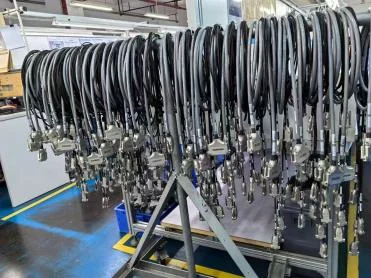




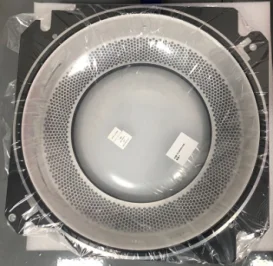

Parts Sales

Semiconductor Knowledge Videos
Advanced Packaging Bonding Equipment Explained

Advanced Packaging Bonding Equipment Explained

The internal chip structure of CPU

The internal chip structure of CPU

Advanced Packaging Made simple

Advanced Packaging Made simple

Semiconductor Front-End Process From Sand to wafer

Semiconductor Front-End Process From Sand to wafer

Inside a Chip The Making of Integrated Circuits

Inside a Chip The Making of Integrated Circuits

deep dive into semiconductors

deep dive into semiconductors

Semiconductor Cleaning Machine Analysis and Promotion

Semiconductor Cleaning Machine Analysis and Promotion

Wet VS Dry Etching What's the difference?

Wet VS Dry Etching What's the difference?

About Us

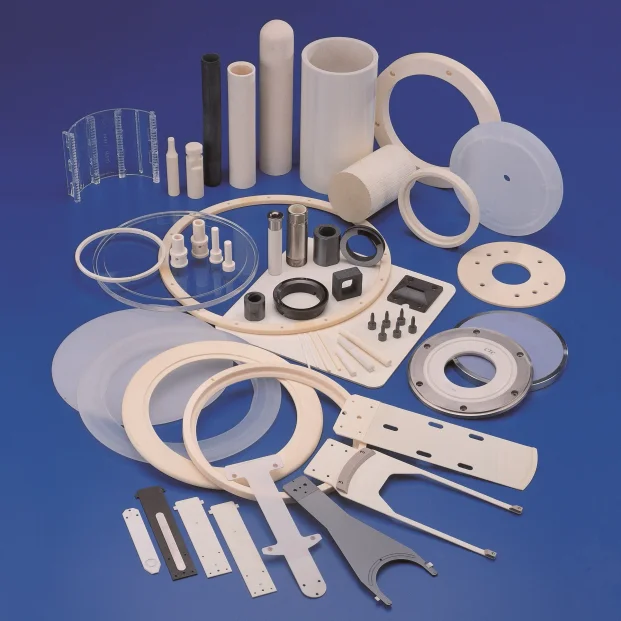
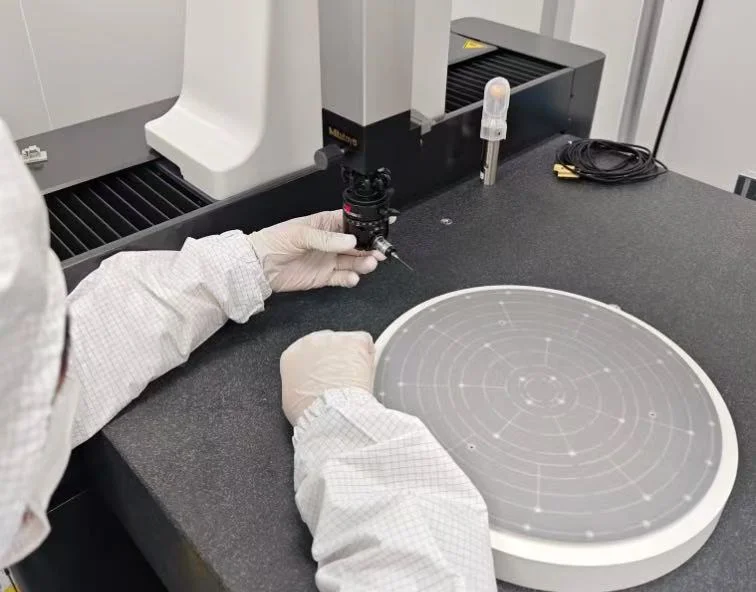
UASC is a leading provider of high-quality solutions in the semiconductor industry. Headquartered in Tainan, Taiwan, with branch offices in Xiamen, Fujian and Ho Chi Minh City, Vietnam, our team comprises professionals from internationally renowned wafer fabs and IC design companies, boasting over 20 years of semiconductor manufacturing experience and technical expertise. We specialize in four key modules: Equipment Solutions, Semiconductor Parts Solutions, Critical Parts Repair, and Semiconductor Technology Support. We are capable of precisely matching resources for both domestic and international semiconductor industry chain integration and talent services.
Latest News&Events

10 /23
2025
Vietnam’s Semiconductor Industry: Progress and Outlook Beyond 2025
2025-10-23

March 3, 2025Posted by Vietnam BriefingWritten by Sudhanshu Singh Vietnam’s semiconductor industry is steered by strategic government policies, increasing foreign direct investment (FDI), and a growing demand for chips across various sectors. With a projected market value of US$31.28 billion by 2027 and a compound annual growth rate (CAGR) of 11.6 percent between 2023 and 2027, Vietnam is steadily positioning itself as a key player in the global semiconductor supply chain. This article examines Vietnam’s semiconductor advancements, investment climate, industry challenges, and long-term growth potential. Vietnam’s semiconductor industry: Current landscape The Vietnam-U.S. Comprehensive Strategic Partnership, announced in September 2023, further accelerated the industry’s momentum, prompting global semiconductor giants to expand operations in the country. Leading players such as Intel, OnSemi, Hana Micron, and Amkor have already established their presence, particularly in outsourced semiconductor assembly and test (OSAT) facilities in the northern region, and research and development (R&D) centers in the south. Prime Minister Pham Minh Chinh’s Decision No. 1018/QD-TTg, issued on September 21, 2024, outlines Vietnam’s semiconductor strategy until 2030, with a vision extending to 2050. This roadmap focuses on talent development, manufacturing capacity, and global integration, ensuring that Vietnam capitalizes on its geopolitical and economic advantages.

10 /23
2025
Middle Eastern Countries Expand Investment in AI and Semiconductor Industries
2025-10-23

The Middle East is rapidly expanding its artificial intelligence (AI) and semiconductor industries, driven by strong capital, clear policy direction, and abundant energy resources. In May, the United States signed $3.2 trillion in technology and business agreements with Saudi Arabia, the UAE, and Qatar, focusing on AI and semiconductors. Soon after, NVIDIA supplied 18,000 Blackwell chips to Saudi AI firm Humain, which began building data centers in Riyadh and Dammam, scheduled to open in 2026. The UAE’s G42 is negotiating with AMD and Qualcomm to diversify suppliers and is planning a 5-gigawatt AI campus to position the region as a global tech hub. Government strategy plays a key role. Under Vision 2030, Saudi Arabia has made AI a national priority. Its $900 billion sovereign fund PIF has invested over $40 billion in AI, and Humain—led by Crown Prince Mohammed bin Salman—aims to build 1.9 gigawatts of data center capacity by 2030. The country also launched a National Semiconductor Center with $266 million in seed funding to attract at least 50 chip design firms. The UAE’s MGX Fund, worth $100 billion and backed by Mubadala and G42, seeks to make AI contribute 20% of the nation’s non-oil GDP by 2031. The region benefits from low industrial electricity costs—40–60% below U.S. levels—and a young population, with nearly half under 24, providing a growing tech talent base. Middle Eastern countries are combining international partnerships with domestic innovation. Humain has joint ventures with AMD and Amazon Web Services, while G42 received $1.5 billion from Microsoft to power its “UAE Stargate” project on Azure. Locally, the UAE’s QuantLase Research Center has developed the region’s first industrial photonic AI chip, now in production in Europe, and Saudi institutions have designed over 20 types of chips. Challenges remain, including heavy reliance on U.S. technology, export restrictions, and the environmental demands of running data centers in desert climates. Overall, the Middle East is leveraging its capital, policy, and energy advantages to strengthen its position in global AI and semiconductor supply chains. While the ecosystem is still maturing, large-scale investment and forward-looking strategies signal a determined and long-term commitment to technological transformation.

10 /23
2025
UMC Introduces 55nm BCD Process Platform to Enhance Power Management Applications
2025-10-23

UMC (United Microelectronics Corporation) has announced the launch of its new 55-nanometer BCD process platform, marking a significant advancement in its specialty process technology portfolio. The platform is designed to meet growing power management needs in electronic devices by integrating analog, digital, and high-voltage power components onto a single chip. This integration enables smaller chip size, lower power consumption, and improved noise immunity. The technology targets high-reliability markets such as automotive electronics, mobile devices, and industrial control, and is expected to gradually replace applications based on the earlier 0.18-micron generation. The new platform offers three process options—Non-EPI, EPI, and SOI—reflecting UMC’s diversified approach to process technology. By balancing scaling and voltage tolerance, the 55nm BCD process provides a key technological node for global semiconductor companies such as Texas Instruments and STMicroelectronics. With a full range of BCD technologies from 0.35µm to 55nm, UMC can deliver customized solutions across different voltage and cost requirements. As global demand for automotive power chips continues to rise—especially in areas like electric vehicle battery management systems, DC-DC converters, and ADAS control modules—the need for reliable BCD processes is becoming increasingly critical. UMC’s new platform also integrates features such as ultra-thick metal layers, embedded flash memory, and resistive memory, allowing chips to combine power management and data storage functions and thereby enhancing design flexibility. This development underscores the growing importance of specialty processes in advanced semiconductor manufacturing and provides a clear reference point for future technological progress. The 55nm BCD platform demonstrates potential in automotive-grade chip production, particularly in power semiconductors and power management ICs. As the global semiconductor industry continues to shift toward specialty technologies, such innovations could open new collaboration opportunities across the supply chain. Areas such as EPI tools, specialized deposition equipment, precision testing systems, and modules like ultra-thick metal layers and embedded memory are likely to see rising demand. These trends highlight emerging opportunities that industry participants worldwide should closely monitor to stay aligned with ongoing technological transitions.